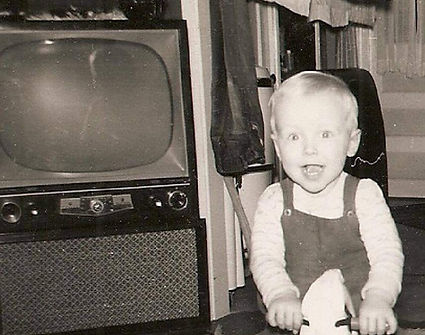
wcia 3 champaign, wicd 15 champaign, wand 17 decatur, wics 20 Springfield, week 25 peoria, whoi 19 peoria, wmbd 31 peoria, wyyz 43 Bloomington, wbln, wtvh, wirl, wrau, wtvp, wdan, classic tv, central Illinois tv, radio, automation, Jimmy Kimmel, Nexstar Media Group, Sinclair Broadcast Group, Television News


VOTE
VOTE
TV Time Capsule
For October 2026

The 1958 Philco Predicta “Holiday” model I have was relatively unique because it had both VHF and UHF tuners. It was purchased at Higgason TV and Appliances in Taylorville in 1958 and was the first TV owned by my great-aunt and uncle, who were like grandparents to me growing up. I inherited it back in the 1970s, and it’s been with me ever since. It's been a sort of “mascot” of my work, documenting the early history of television across Mid-Illinois.
The TV Story (1953-2026)
I guess my interest in all things TV was inadvertently started with members of my own family. My Dad and his brother had a “side hustle” fixing and selling used TVs. That meant our house had a TV in virtually every room. I remember being the only kid in my class from kindergarten and grade school who had a TV in his bedroom.
Meanwhile, my Dad's parents had a TV since about 1951, even before Mid-Illinois had a single TV broadcast channel! My grandparents only received KSD-TV, Channel 5 from St. Louis, but only when conditions were “just right.”


Here is a picture of my grandparents' Zenith “Porthole” table-model TV, purchased in 1951. I donated it to the Vermilion County Museum several years ago.
(left): My dad installing an antenna to receive KSD-TV in Taylorville in 1951. The antenna was connected to the Zenith "Porthole" TV shown above.


Television has come a long way, especially in recent years. Technology has changed many times over, even though the NTSC analog system was used from 1941 through 2009; with its 525-line resolution (or 480i visible), television sets changed in many ways during that period. TV stations' broadcast power outputs continued to increase from 1953, when UHF stations operated at around 14,000 watts, to as much as 5 million watts around 2000. Local VHF stations maintained power outputs established in the early 1950s.

Zenith "Porthole" console

Zenith "porthole" complete combination set 1949

Very early unknown brand TV, probably from the late 1930s, mid-1940s combination set with mirror reflection screen to make the screen appear larger
Zenith "Porthole" console
TV sets, all made in the USA, shifted from resistors, capacitors, and vacuum tubes to solid-state components, eliminating vacuum tubes and using transistors that operated at cooler temperatures, lasted longer, and required fewer service calls. Picture tubes went from monochrome to color, with newer types that improved color and brightness, making the picture more realistic for viewers.
TVs came in wooden cabinets designed to match other living room furniture styles from “early American” to “modern contemporary.” Some had doors to hide the “ugly green picture tube” when the set was not in use. Some included phonograph players, AM/FM and even shortwave radios, hi-fi mono sound systems, and later stereo speakers. Prices could approach half the cost of a new car, as some original 1950s models cost anywhere from a couple hundred dollars to nearly $1000.
The first Television revolution began with network-owned stations mostly in East Coast metropolitan centers and Chicago. NBC and CBS owned experimental stations, with some even owned by radio and future TV manufacturers. Research began in the 1930s and was introduced at the 1939 New York World's Fair. After World War II, most television development either stopped or paused until the mid-1940s. By the late 1940s, NBC and CBS radio introduced their TV networks, but few viewers could watch them.
After World War II, when local TV pioneers began to invest in local TV, mostly newspaper publishing companies, established radio station owners, and other local entrepreneurs, the need for additional channels to broadcast from became evident.
The FCC halted the assignment of new television and even some radio broadcast stations in what is called “The Freeze.” During this time, the FCC worked to add more available TV broadcast frequencies to the Very High Frequency range that hosted channels 2 through 13 from the Ultra High Frequency range, and assigned channel numbers 14 through 83 to host TV stations throughout the US.


Two major television program providers and manufacturers were also developing their own color TV technology. One of the main features of the CBS/Columbia system involved a spinning disc (I didn’t make that up) that spun at incredible speed in the TV set to display a much smaller picture on a screen with a huge, thick lens. The CBS system wasn't compatible with the current NTSC black-and-white standards, so color programming wouldn't appear on then-current black-and-white TV sets.
Meanwhile, NBC/RCA was working on its own electronic system, fully compatible with the standards in use at the time. Many said viewing was better with the CBS system (but I doubt it, really), but its practical use in homes would be extremely limited with its huge mechanical spinning disc. Even with that in mind, the FCC originally gave CBS the commercial use rights for its system after less-than-impressive demonstrations by RCA before the FCC Commissioners.

Westinghouse Color TV 1954
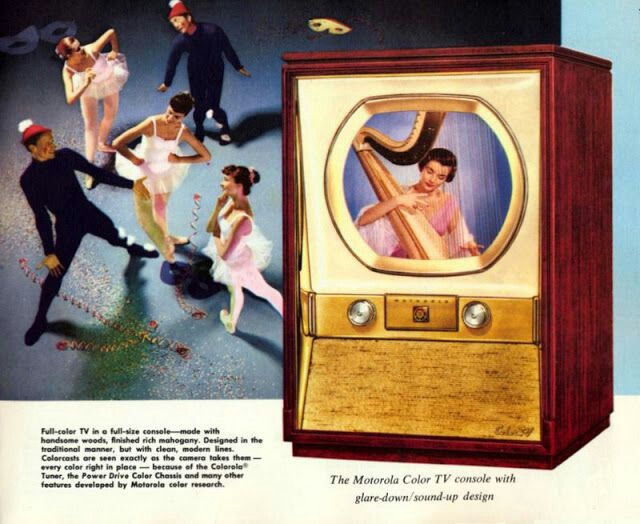
Motorola Color TV 1954

Color TV scamming in action. An "adapter" which alleged to make any black and white TV a color set!
Westinghouse Color TV 1954
Evidently, RCA wasn’t quite ready, and it worked its technicians hard to perfect the system's application. RCA soon reached that level of perfection and approached the FCC again. In early 1953, the FCC changed its ruling to use RCA's standards for compatible color broadcasting in the US. That put RCA and its co-owned NBC Television network in the lead not only in producing color TVs but also in manufacturing color broadcast equipment for local TV stations. CBS would soon leave the business of producing consumer TVs and broadcast equipment. NBC allowed other manufacturers, under a license, to produce color sets using the NBC technology.
That color TV setback would affect viewers' access to CBS programming for years, with only a handful of color broadcasts across the network during the 1950s and early 1960s. CBS president William Paley initially refused to buy RCA equipment to produce color programming. When he had no choice, the network bought RCA cameras, then stripped the equipment of all RCA branding so no one would know its manufacturer (unless you were familiar with how RCA equipment looked).
Color TV drove the second TV revolution beginning in 1953, although even a decade later only 3 to 5 percent of homes had color TV. Color sets initially cost near $1,000 (equivalent to near $10,000 today), then fell to around $500-$600 by the late 1950s. Still, only 90 percent of homes even had a black-and-white TV in 1963! It wouldn’t be until 1972, nearly 20 years after the development of a working color TV system, that 50 percent of homes had color TV.
To record shows for the Western time zones, or to archive live TV programs in the early days, networks and TV stations recorded them on 16mm film using an actual TV monitor. That film was called a "kinescope." Virtually all of what we have seen of early television broadcasts exists because someone archived it or took the film for their own collection. Many stars maintained collections of their work and later had family members donate them to museums or university libraries.
Westinghouse Color TV 1954
Motorola Color TV 1954
Color TV scamming in action. An "adapter" which alleged to make any black and white TV a color set!
Westinghouse Color TV 1954
The third TV revolution was the use of videotape recorders/players to delay live programming on the East Coast for the Western time zones. Live programming originated on both coasts, with NBC Color Studios in Burbank, California; CBS Television City in Hollywood; NBC at 30 Rockefeller Center in New York; and CBS Studios in New York. Chicago also hosted many live programs broadcast on the networks.
In the late 1950s, video recorders were used to record and edit programs, especially variety shows. RCA and AMPEX pioneered video recorders and players that allowed videotape to be reused. Unfortunately, that reuse also led to the loss of many classic shows, which were erased and rerecorded with newer programming because archiving videotaped programs was too expensive. Many local TV stations couldn’t afford their own video recorders/players until the early 1960s.


The television era began with outdoor antennas on tall towers attached to homes; then many households shifted to community antenna systems from the 1950s into the 60s, which evolved into cable television from the late 1960s into the 70s, promising more channel choices. C-Band home satellite systems brought city-like TV choices to rural areas from the mid-80s into the early 2000s, before channel scrambling ended the “free” viewing those 9- or 10-foot satellite dishes provided.
Small home satellite systems from DISH and DirecTV replaced that, allowing multi-channel viewing at the same time, with local channels offered as part of several channel packages at various prices. The consolidation of cable companies brought even more selection but at much higher cost to households. Now, many cable systems have become internet providers, offering even more television choices through seemingly countless video streaming services. Now, though, many households have chosen to "cut the cable" and return to antenna-only viewing and free or subscription streaming services.
From the late 70s into the 80s, TVs had companion electronic accessories that let viewers watch their favorite movies and TV shows on their schedules, rather than on networks' and local stations' schedules. From the early 1980s RCA Selectavision to Sony Betamax to JVC’s VHS player/recorders and Pioneer LaserDisc players, these devices changed what people watched and when.
Streaming services replaced VHS rental stores, which provided pre-recorded VHS tapes, and later DVD rentals. Netflix began as a mail-order DVD rental service, then evolved into a streaming service and a first-run program provider too.
Remember the NTSC TV system with the original 525-line resolution and the 4:3 screen size mentioned earlier? We’re now 30 years into ATSC 1.0 digital television, with 750 to 1080i/p lines, 16:9 widescreen video, and a station’s ability to add subchannels to its main broadcast signal to increase programming variety for viewers. But that wasn’t enough!
Now we’re looking at a conversion to what is called “NextGen TV,” or ATSC 3.0, which will allow up to 2160p resolution (4K UHD) and up to 120 frames per second. ATSC 3.0 also offers a laundry list of other future capabilities, but using each feature will depend on what kind of profit providers can make from those features. That final step into NextGen TV has been slow with TV manufacturers, which are virtually all offshore now; local stations' investments have been limited, and the FCC has been very slow to understand the repercussions of ATSC 3.0 on the public at large.
One change for the better has been in the production and sales of flat-screen digital TV receivers. For most families, the cost as a percentage of income has dropped to far less than even one-half of one month's salary. The wide-screen monsters are more reliable, have more features, and have increasing screen sizes many times those of even the big 27” screens of CRTs, and even up to larger than 75 inches. Plus, weighing far, far less than those early sets, you can mount them on the walls of almost any room in almost any home, garage, and outdoor patio.
In a nutshell, that’s the story of TV origination and reception from 1953 to the present day. So let’s take a look at what it was like to see these advertisements for TVs and accessories in the past, as found in the TV Time Capsule opened for October of 2026.
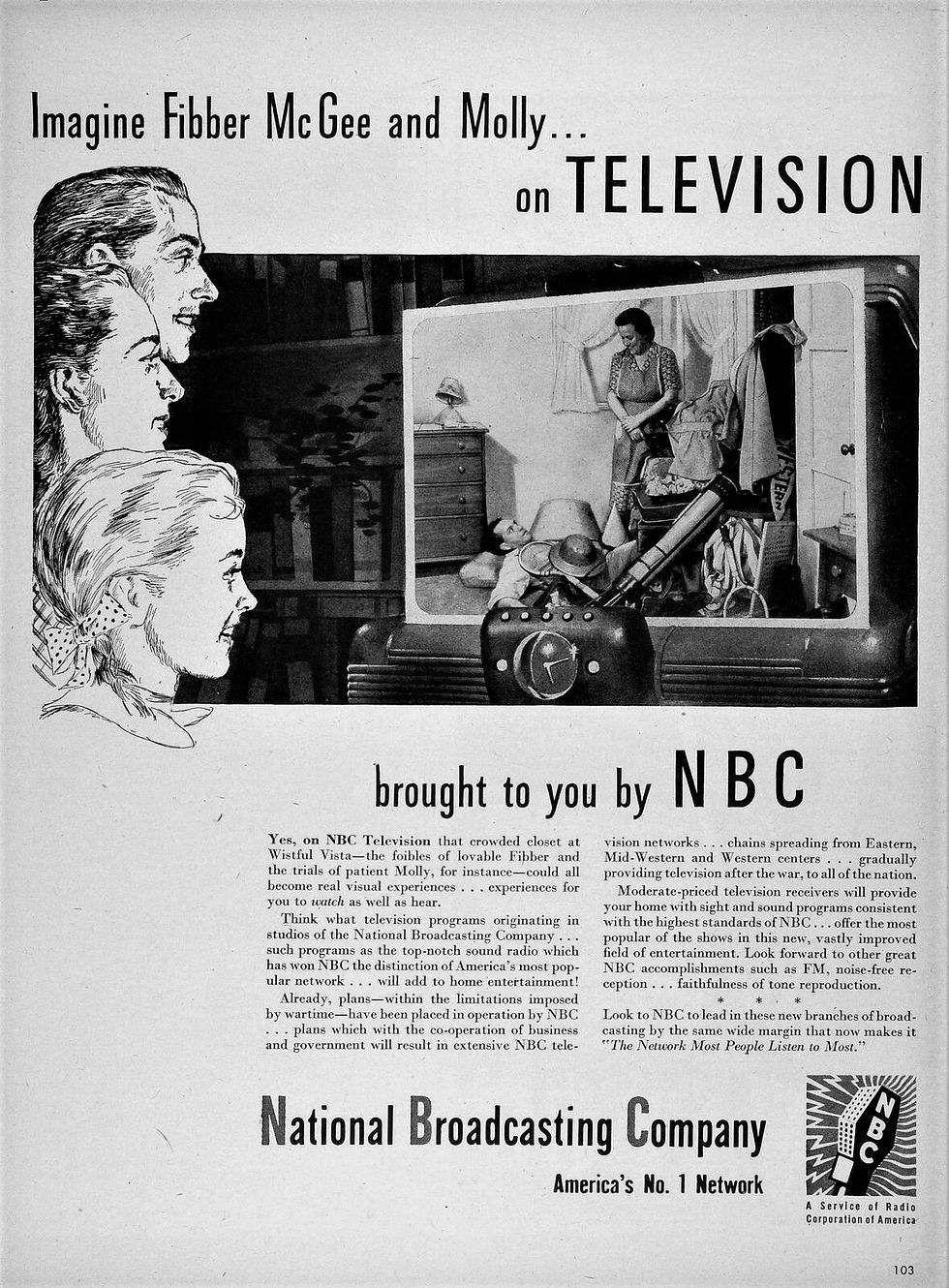


Random TV ads from the 1950s through the 80s, plus VCR and video disc ads.